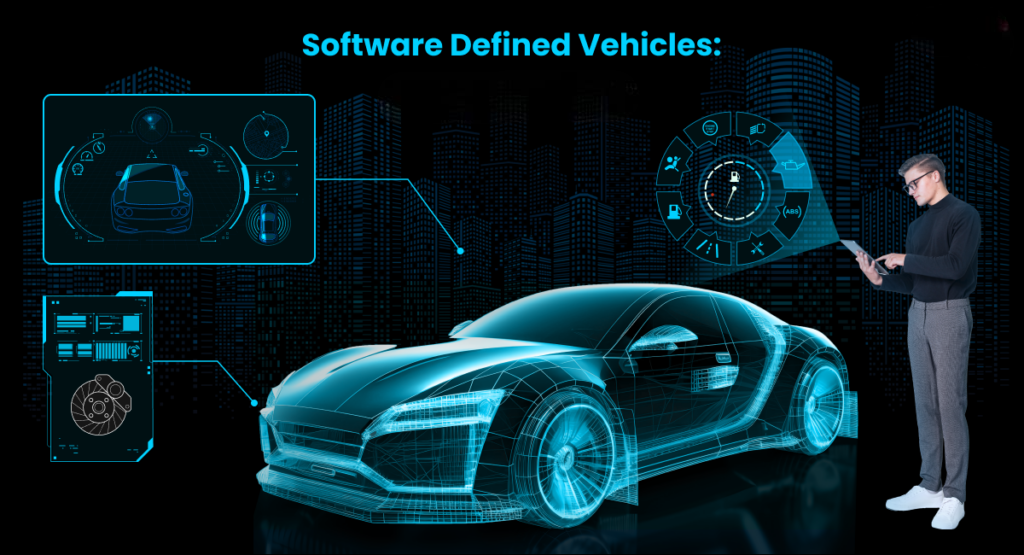
The rise of Software-Defined Vehicles (SDVs) is transforming the automotive industry, allowing manufacturers to offer scalable customization without the complexity traditionally associated with hardware-based vehicle changes. Unlike conventional vehicles, where hardware upgrades or modifications are necessary to enhance features, SDVs rely on software to enable functionalities, providing greater flexibility and reducing the costs and time associated with physical changes. The concept of SDVs revolves around leveraging software architecture to define, control, and enhance vehicle features, making them adaptable to new customer demands, regulatory requirements, and technological advancements over time.
A key element in achieving scalable customization is the adoption of modular software architectures. This approach allows automakers to build standardized software components that can be reused across different vehicle models, enabling rapid updates and modifications without disrupting the entire system. As a result, automakers can offer a wide range of features, from advanced infotainment systems to autonomous driving capabilities, while maintaining a unified development process. This not only simplifies the integration of new features but also minimizes the cost and complexity of vehicle development.
The introduction of Over-the-Air (OTA) updates is another critical aspect that makes SDVs so powerful. By enabling manufacturers to remotely update vehicle software, automakers can continuously improve performance, introduce new features, and address security vulnerabilities without requiring customers to bring their vehicles in for physical modifications. This ongoing update capability ensures that the vehicle remains at the forefront of technological advancements, providing a dynamic user experience.
Standardized development platforms like the AUTOSAR Adaptive Platform further enhance the scalability of SDVs by providing a common framework for developing and integrating software across various vehicle models and manufacturers. This standardization reduces development time and complexity while ensuring compatibility between different vehicle components and systems.
Ideal Software-Defined Vehicle is one that offers unparalleled flexibility, enabling manufacturers to deliver customized experiences without the traditional complexity of hardware upgrades. By leveraging modular software architectures, OTA updates, and standardized platforms, automakers can enhance vehicle performance, safety, and user satisfaction while minimizing costs and streamlining production processes. The future of automotive manufacturing lies in the ability to innovate and adapt quickly—qualities that SDVs perfectly embody.