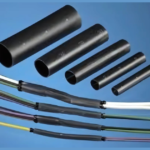
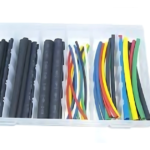
Heat shrink tubing is one of several insulation methods used for protecting wires, cables, and electrical components. Compared to alternatives like electrical tape, liquid insulation, and rigid tubing, heat shrink tubing offers unique advantages and some limitations. Below is a comparison based on key factors such as durability, ease of application, and environmental resistance.
1. Durability and Mechanical Protection
Heat shrink tubing provides a strong and protective barrier against physical damage, abrasion, and moisture. Unlike electrical tape, which can peel over time, heat shrink tubing forms a secure and long-lasting covering. Rigid conduits may offer more mechanical protection, but they lack flexibility and ease of installation.
2. Electrical Insulation
Heat shrink tubing offers superior dielectric strength, making it an effective insulator for electrical applications. While electrical tape can also insulate, it is prone to wear and loosening. Liquid electrical insulation can provide a seamless coating but lacks the additional physical protection that heat shrink tubing provides.
3. Ease of Installation
Applying heat shrink tubing is straightforward but requires a heat source such as a heat gun or lighter. Electrical tape is easier to apply manually but can require multiple layers for effective insulation. Liquid insulation is also easy to apply but takes time to cure, which may slow down work in fast-paced environments.
4. Resistance to Environmental Factors
Heat shrink tubing is highly resistant to water, chemicals, and temperature fluctuations. It outperforms electrical tape, which can degrade over time when exposed to moisture or extreme heat. Rigid tubing offers excellent protection but is bulkier and less flexible. Liquid insulation can resist moisture but may not provide the same level of physical protection.
5. Flexibility and Space Efficiency
Heat shrink tubing maintains flexibility while conforming to the shape of wires, making it ideal for compact spaces. Electrical tape is also flexible but can unravel over time. Rigid tubing is not flexible, making it less suitable for confined or curved installations.
6. Cost Considerations
Electrical tape is the most budget-friendly insulation method but has a shorter lifespan. Heat shrink tubing is more expensive but offers greater long-term reliability. Liquid insulation is moderately priced and works well for sealing connections, while rigid tubing is the most expensive option due to material and installation costs.