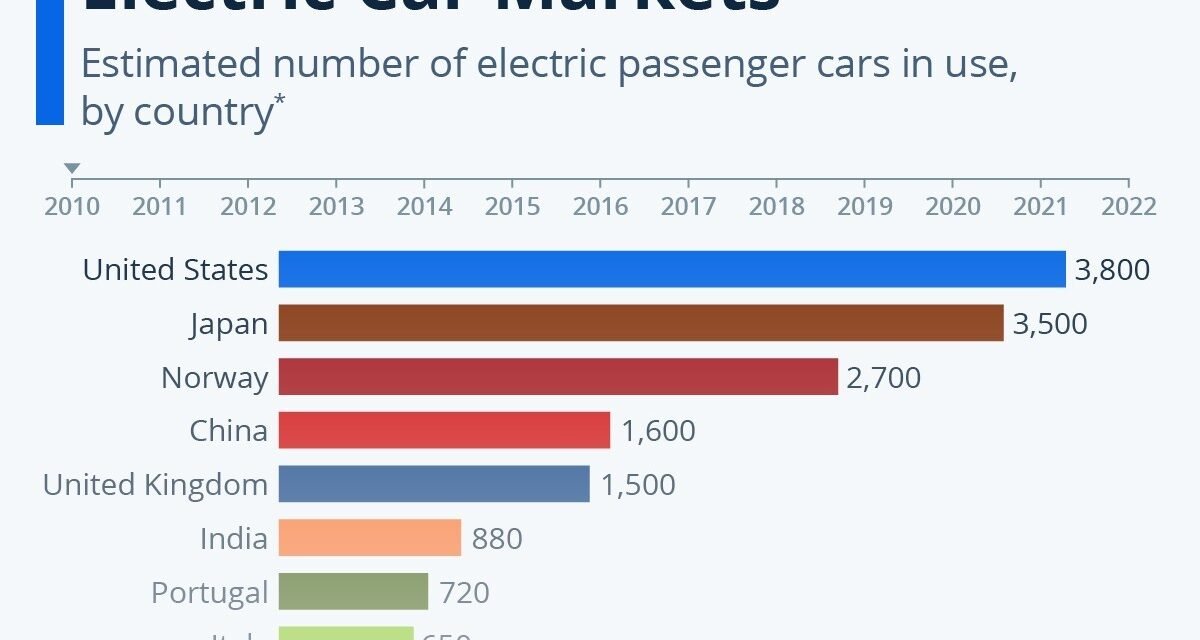
The adoption of electric vehicles (EVs) has grown rapidly in several countries due to government incentives, infrastructure investments, environmental concerns, and technological advancements. Below are the countries with the highest EV adoption rates, measured as the percentage of total vehicle sales or the number of EVs on the road.
1. Norway
- Adoption Rate: Over 50% of all new cars sold in Norway are electric vehicles.
- Key Factors:
- Government Incentives: Exemptions from taxes, tolls, and fees; free parking; and access to bus lanes.
- Comprehensive Charging Infrastructure: Over 16,000 public charging points across the country.
- Environmental Awareness: Norway’s commitment to reducing emissions and its clean energy grid (mostly hydropower).
2. The Netherlands
- Adoption Rate: Over 15% of new car sales in the Netherlands are electric.
- Key Factors:
- Government Support: Tax benefits and incentives for both consumers and businesses purchasing EVs.
- Charging Network: A dense and well-developed EV charging infrastructure.
- Urban Focus: EVs are especially popular in urban areas, where residents have shorter commutes and easier access to charging stations.
3. China
- Adoption Rate: Over 5% of new car sales are electric, making China the world’s largest EV market by volume.
- Key Factors:
- Government Subsidies: Direct subsidies for EV buyers, along with incentives for local manufacturers to produce EVs.
- Massive Market: The large population and government efforts to curb pollution have made China a leader in EV adoption.
- Domestic EV Manufacturers: Companies like BYD, NIO, and Geely are driving innovation and adoption.
4. Germany
- Adoption Rate: Over 10% of new car sales in Germany are electric, with plug-in hybrid electric vehicles (PHEVs) also playing a significant role.
- Key Factors:
- Government Incentives: Subsidies for EV purchases, tax breaks, and reduced registration fees.
- Growing Infrastructure: Extensive network of public charging stations.
- Automaker Support: Major German automakers like Volkswagen, BMW, and Mercedes-Benz have committed to expanding their EV offerings.
5. United Kingdom
- Adoption Rate: Over 10% of new car sales in the UK are electric, with further growth expected as the country aims to ban the sale of new internal combustion engine (ICE) vehicles by 2030.
- Key Factors:
- Government Grants: The UK offers incentives for purchasing EVs, including grants for home charging and tax breaks.
- Infrastructure: Increasing number of public charging stations.
- Environmental Policies: The UK’s aggressive climate goals and the push for cleaner air have accelerated EV adoption.
6. Sweden
- Adoption Rate: Over 30% of new car sales are electric vehicles.
- Key Factors:
- Government Incentives: Generous subsidies for EV purchases and a strong focus on sustainability.
- Clean Energy: Sweden has a significant share of renewable energy, including hydropower, supporting the use of EVs.
- Environmental Consciousness: A high level of public awareness regarding climate change and pollution.
7. France
- Adoption Rate: Over 10% of new car sales are electric.
- Key Factors:
- Government Support: Tax credits, subsidies, and incentives for consumers and businesses.
- Growing Charging Infrastructure: Expansion of the charging network across the country.
- Automaker Commitment: Major French automakers like Renault are leading in the EV space.
8. Canada
- Adoption Rate: Over 5% of new car sales are electric, with certain provinces like British Columbia and Quebec having adoption rates above the national average.
- Key Factors:
- Provincial Incentives: Provinces like British Columbia and Quebec offer rebates, tax credits, and incentives.
- Infrastructure Development: An expanding network of charging stations, especially in major urban centers.
9. United States
- Adoption Rate: Over 5% of new car sales are electric, with significant adoption in certain states like California (over 15% of new car sales).
- Key Factors:
- State-Level Incentives: States like California offer strong incentives for EV purchases and extensive charging infrastructure.
- Automaker Leadership: Companies like Tesla are leading the global EV market, while traditional automakers like Ford and GM are ramping up their EV production.
- Federal Tax Credit: Consumers in the U.S. can take advantage of federal tax credits for EV purchases.
10. Denmark
- Adoption Rate: Over 10% of new car sales are electric.
- Key Factors:
- Strong Government Policies: Denmark has introduced policies such as exemptions from vehicle taxes for EVs.
- Sustainability Focus: Denmark’s commitment to sustainability and reducing carbon emissions has helped EV adoption.
- Public Awareness: High public awareness and strong support for renewable energy.
Other Notable Countries:
- Finland: Growing EV market with a strong emphasis on renewable energy.
- Spain: Increasing adoption driven by government incentives and automaker support.
- Portugal: High adoption rate due to strong government incentives and growing charging infrastructure.
Conclusion
Countries with the highest EV adoption rates tend to have a combination of strong government incentives, progressive environmental policies, well-developed charging infrastructure, and a commitment to sustainable energy. Norway, the Netherlands, and China lead the way, with significant growth expected in other markets like the UK, Germany, and France, as the world shifts towards greener, more sustainable transportation.
Hashtags
#EVLeaders #EVAdoptionGlobal #TopEVCountries #ElectricVehicleAdoption #EVRevolution #GreenMobilityLeaders #EVGrowthCountries #SustainableTransportLeaders #NorwayEVAdoption #NorwayElectricCars #NorwayEVMarket #NorwayGreenTransport #NorwayEVSuccess #NorwayZeroEmissions #ChinaEVMarket #ChinaElectricVehicles #EVInChina #ChinaEVGrowth #ElectricCarsInChina #ChinaEVLeaders #ChinaGreenTransportation #GermanyEVAdoption #GermanyElectricCars #GermanyEVRevolution #GreenCarsInGermany #ElectricVehiclesGermany #GermanySustainableMobility