The manufacturing of industrial coatings involves a series of steps to ensure the final product meets quality, durability, and performance standards. The process includes raw material selection, formulation, production, testing, and packaging. Below is a step-by-step breakdown of how industrial coatings are manufactured.
1. Raw Material Selection & Procurement
The process begins with selecting and sourcing high-quality raw materials that define the coating’s properties.
- Binders (Resins): Provide adhesion, durability, and film-forming properties (e.g., epoxy, polyurethane, acrylic).
- Pigments & Fillers: Add color, opacity, and protection (e.g., titanium dioxide, zinc oxide, iron oxide).
- Solvents & Carriers: Adjust viscosity and aid application (e.g., water-based, organic solvents).
- Additives: Enhance performance (e.g., UV stabilizers, anti-foaming agents, corrosion inhibitors).
2. Formulation & Mixing
Once raw materials are gathered, the formulation process begins.
- Ingredients are measured and blended in precise proportions.
- Specialized equipment such as high-speed dispersers and mixers ensures even distribution of pigments and additives.
- Temperature and mixing speed are carefully controlled to maintain consistency.
3. Milling & Particle Size Reduction
To achieve uniform color and smooth texture, the mixture undergoes milling.
- Bead Mills or Ball Mills break down pigment and filler particles for fine dispersion.
- The smaller the particle size, the better the coating’s appearance and durability.
4. Quality Control Testing
Before further processing, the coating undergoes extensive testing for:
- Viscosity (flow behavior)
- Color consistency
- Film thickness
- Adhesion strength
- Corrosion resistance
- Chemical resistance
- UV and weather durability
- Adjustments are made if any performance criteria are not met.
5. Thinning & Adjustments
Once the base formulation is validated, coatings may be adjusted for:
- Viscosity (for ease of application)
- Gloss level (matte, semi-gloss, high-gloss)
- Drying time (fast drying vs. slow curing)
6. Filtration & Packaging
- The final product is filtered to remove impurities and ensure a smooth, high-quality finish.
- The coatings are packaged in drums, cans, or bulk containers based on industry requirements.
- Labels, safety data sheets (SDS), and application instructions are included.
7. Final Quality Assurance & Compliance
- Batch samples are taken for final quality verification.
- Coatings must comply with environmental, health, and safety regulations (e.g., VOC limits, REACH, EPA, ISO standards).
- Any coatings failing quality tests are reprocessed or discarded.
8. Distribution & Application
- Coatings are distributed to automotive, construction, marine, aerospace, and industrial manufacturers.
- Proper storage and handling instructions are provided to maintain quality.
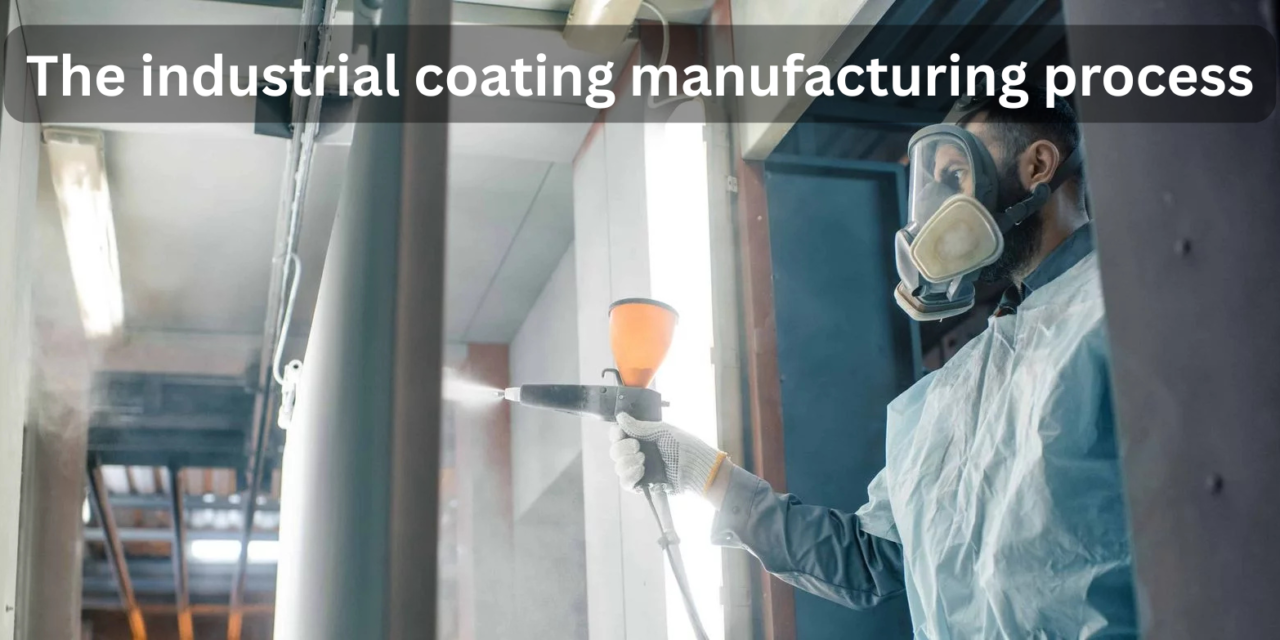
- Coatings are applied using spraying, brushing, dipping, or electrostatic techniques.
Conclusion
The industrial coating manufacturing process involves careful material selection, precise formulation, rigorous quality control, and compliance with regulations. Each step ensures that coatings provide corrosion resistance, chemical durability, and long-lasting protection. As technology evolves, manufacturers are shifting towards eco-friendly, water-based, and high-performance coatings to meet industry demands.
Hashtags
#IndustrialCoatingManufacturing #CoatingProduction #CoatingTechnology #ManufacturingProcess #SurfaceFinishing #RawMaterialSelection #FormulationScience #PolymerChemistry #PigmentSelection #AdditivesAndResins #CoatingMixing #PigmentDispersion #ResinBlending #IndustrialBlending #HighShearMixing #CoatingMilling #NanoGrinding #ParticleSizeReduction #CoatingFiltration #QualityTesting #ISOCertifiedCoatings #LabTestingCoatings #CoatingPerformanceTesting #CoatingApplication #PowderCoatingProcess #EcoFriendlyCoatings