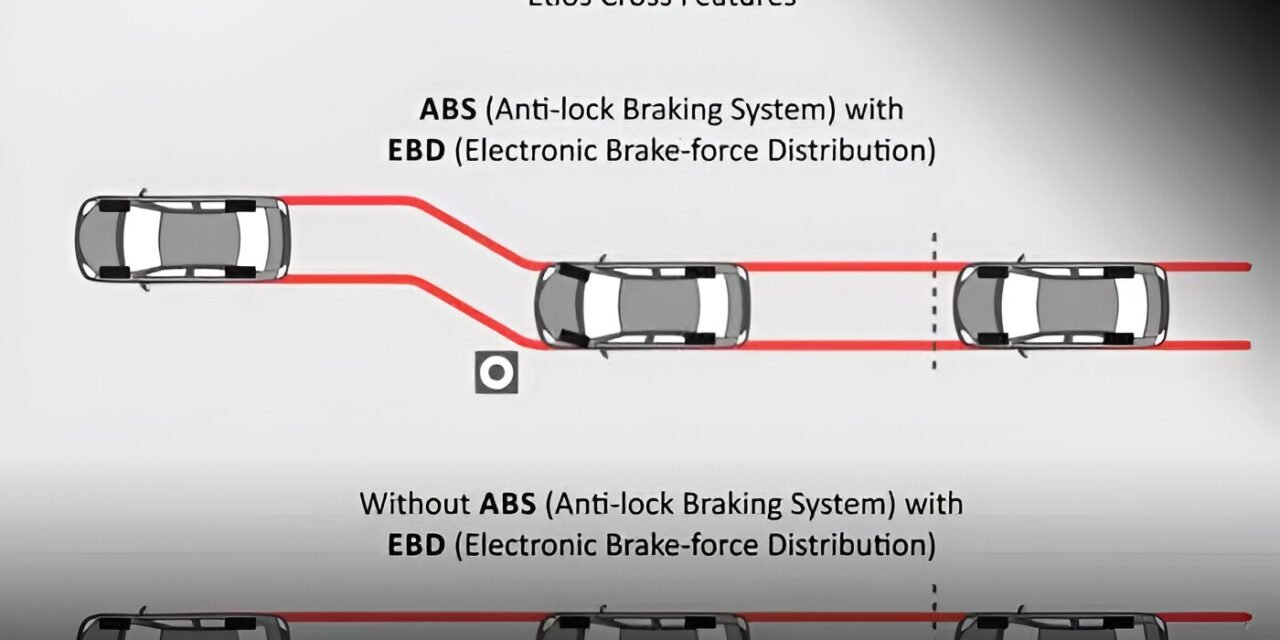
ABS (Anti-lock Braking System) and EBD (Electronic Brakeforce Distribution) are essential components in modern braking systems that enhance vehicle safety and control during braking. Although they work together to improve braking performance, they serve different purposes. Here’s how each system functions:
1. Anti-lock Braking System (ABS)
ABS is designed to prevent the wheels from locking up during braking, ensuring that the driver maintains steering control and stability.
How ABS Works:
- Sensors: ABS uses sensors to monitor the rotational speed of each wheel. If any wheel is about to lock (i.e., its speed drops dramatically compared to the others), the system detects this and activates the ABS.
- Modulating Brake Pressure: When ABS detects a wheel is about to lock, it rapidly modulates the brake pressure by applying and releasing the brakes multiple times per second. This process is often called pulsing. The modulation helps maintain maximum braking force while preventing the wheel from skidding.
- Pump and Valve System: ABS includes a hydraulic pump and valves that adjust brake pressure. The system can reduce pressure to a locked wheel, and then increase it again, ensuring the wheel continues to rotate, which helps maintain control of the vehicle.
Benefits of ABS:
- Maintains Steering Control: By preventing wheel lockup, ABS allows the driver to maintain the ability to steer the vehicle, which is crucial during emergency braking or when stopping on slippery surfaces.
- Improved Stopping Distance on Low Traction Surfaces: While ABS may not always reduce the overall stopping distance on dry roads, it significantly improves stopping performance on wet, icy, or slippery roads by preventing the wheels from locking.
- Reduces Skidding: ABS helps minimize the risk of skidding and loss of control, especially in emergency braking situations or when driving on slick surfaces.
2. Electronic Brakeforce Distribution (EBD)
EBD works alongside ABS to optimize braking force between the front and rear axles, depending on factors like vehicle load, weight distribution, and road conditions. It ensures that the appropriate amount of braking force is applied to each axle for better control and shorter stopping distances.
How EBD Works:
- Sensors and Load Detection: EBD uses sensors that detect the load on each axle (such as the weight distribution of passengers and cargo). When the vehicle is heavily loaded or carrying additional weight at the rear, the rear axle needs more braking force to stop the vehicle efficiently.
- Automatic Adjustment of Brake Force: The system automatically adjusts the brake force applied to the front and rear brakes to optimize stopping power. In a heavily loaded vehicle, EBD ensures the rear brakes receive more force, while lighter loads may result in more brake force at the front.
- Dynamic Adjustment: EBD constantly monitors the braking process and adjusts brake force in real-time to account for changes in vehicle load, road conditions, and braking performance.
Benefits of EBD:
- Optimized Braking Efficiency: EBD improves the balance of brake force between the front and rear axles, ensuring better braking performance, reducing the likelihood of nose-diving (where the front of the vehicle dips during braking), and increasing the stability of the vehicle.
- Improved Stopping Distance: By ensuring each axle gets the proper brake force, EBD can reduce overall stopping distances and improve vehicle stability during braking.
- Increased Safety in Varying Conditions: EBD provides more effective braking regardless of vehicle load or road conditions, enhancing safety in both light and heavy vehicle states.
How ABS and EBD Work Together:
- While ABS focuses on preventing wheel lock-up and maintaining steering control during braking, EBD optimizes the distribution of brake force between the front and rear axles for maximum braking performance.
- ABS can work independently, but EBD relies on the ABS system to operate effectively, especially when the braking force needs to be adjusted dynamically during an emergency stop.
For example, in a situation where a vehicle is fully loaded, the EBD system will adjust the brake force to the rear brakes, while the ABS system ensures that all wheels do not lock during the emergency stop.
In summary:
- ABS prevents wheel lockup during braking by modulating brake pressure, allowing the driver to maintain steering control.
- EBD optimizes brake force distribution between the front and rear axles based on vehicle load, improving braking efficiency and stability.