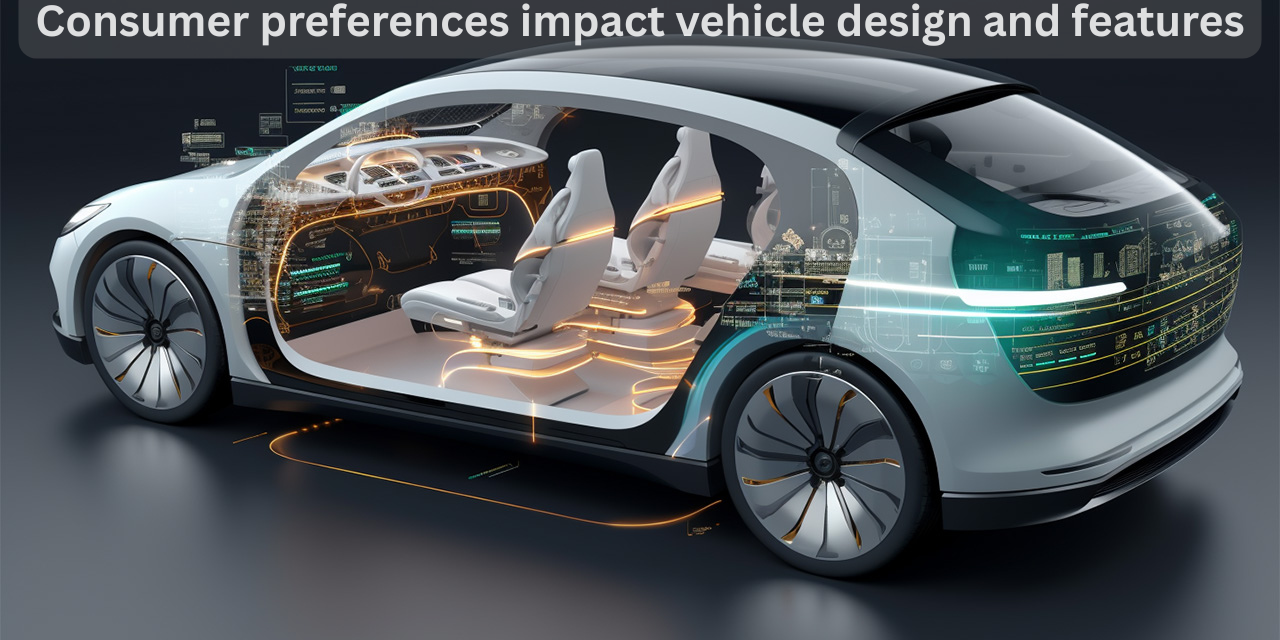
Consumer preferences significantly influence vehicle design and features, shaping how manufacturers innovate and adapt to meet market demands. Here’s how:
1. Demand for Fuel Efficiency
- Impact: Rising fuel prices and environmental awareness drive the need for more efficient engines, hybrid technology, and lightweight materials.
- Design Response: Sleeker aerodynamics, advanced powertrains, and materials like aluminum and carbon fiber are integrated into designs.
2. Safety as a Priority
- Impact: Consumers prioritize safety, expecting advanced driver assistance systems (ADAS) and robust crash protection.
- Design Response: Inclusion of features like automatic emergency braking, lane-keeping assist, adaptive cruise control, and stronger structural frames.
3. Technology and Connectivity Expectations
- Impact: Buyers demand seamless integration of smartphones, infotainment, and real-time connectivity.
- Design Response: Vehicles now include touchscreen interfaces, voice recognition, over-the-air updates, and connected car ecosystems.
4. Preference for Customization
- Impact: Consumers want personalized vehicles that reflect their lifestyle and preferences.
- Design Response: Offering customizable trims, color palettes, and modular add-ons for interiors and exteriors.
5. Focus on Sustainability
- Impact: Eco-conscious buyers prefer electric or hybrid vehicles and sustainable manufacturing practices.
- Design Response: Development of EVs, use of recycled materials, and designs that highlight eco-friendly credentials.
6. Shift Toward SUVs and Crossovers
- Impact: The global trend toward larger, versatile vehicles shapes production priorities.
- Design Response: Manufacturers invest in SUV and crossover models with off-road capabilities, spacious interiors, and modern styling.
7. Urban and Compact Living
- Impact: Urban consumers often seek compact, easy-to-park, and maneuverable cars.
- Design Response: Introduction of compact models, electric micro-cars, and features like automated parking.
8. Luxury and Comfort
- Impact: Premium buyers value comfort, high-quality materials, and luxury features.
- Design Response: Vehicles feature plush interiors, advanced climate control, massage seats, and quiet cabins.
9. Performance and Driving Experience
- Impact: Enthusiasts seek powerful engines, precise handling, and dynamic driving features.
- Design Response: Automakers develop performance-focused models with turbocharged engines, advanced suspension systems, and sport-tuned configurations.
10. Affordability and Cost of Ownership
- Impact: Price-sensitive buyers look for value, reliability, and low maintenance costs.
- Design Response: Emphasis on durable, cost-effective materials, efficient production, and extended warranties.