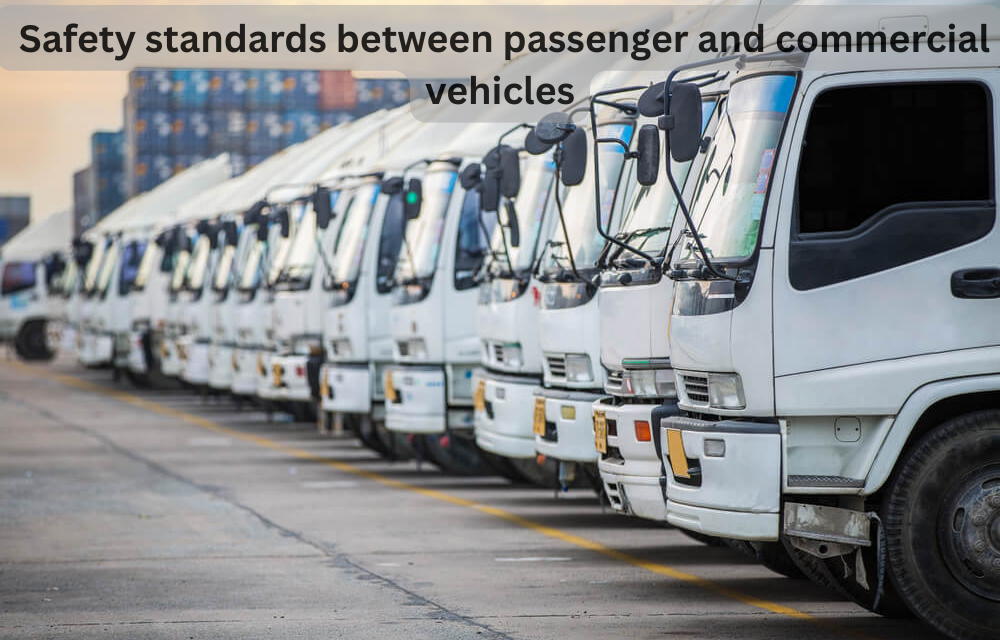
Safety standards for passenger and commercial vehicles vary based on their purpose, usage, and regulatory requirements. Here’s a breakdown:
1. Crashworthiness and Occupant Safety
- Passenger Vehicles:
- Focus on occupant protection with features like airbags, seat belts, and crumple zones.
- Stringent crash test ratings for frontal, side, and rollover collisions.
- Commercial Vehicles:
- Emphasis on structural integrity and durability to withstand heavy loads.
- Limited focus on occupant features, as many commercial vehicles prioritize cargo or functional safety.
2. Active Safety Systems
- Passenger Vehicles:
- Equipped with advanced driver-assistance systems (ADAS), such as lane-keeping assist, adaptive cruise control, and automatic emergency braking.
- Commercial Vehicles:
- Include stability control systems, collision mitigation technology, and blind-spot detection, tailored to larger vehicle dynamics and longer stopping distances.
3. Regulatory Requirements
- Passenger Vehicles:
- Standards set by agencies like NHTSA (USA), Euro NCAP (Europe), or similar bodies.
- Compliance focuses on crash tests, child safety, and pedestrian protection.
- Commercial Vehicles:
- Governed by different bodies and regulations, often including additional safety features for roadworthiness, such as load securement and vehicle stability.
4. Driver Safety and Fatigue
- Passenger Vehicles:
- Comfort features like ergonomic seating and infotainment systems focus on user experience rather than fatigue mitigation.
- Commercial Vehicles:
- Tachographs and electronic logging devices (ELDs) monitor driver hours to reduce fatigue-related incidents.
- Mandatory rest breaks and stricter regulations for commercial drivers.
5. Cargo and Passenger Safety
- Passenger Vehicles:
- Safety standards prioritize passengers with no cargo considerations.
- Commercial Vehicles:
- Standards ensure secure cargo loading to prevent accidents caused by shifting loads.
- Passenger commercial vehicles (e.g., buses) must meet additional standards for emergency exits, fire safety, and crash protection.
6. Testing and Inspection
- Passenger Vehicles:
- Regular testing includes emissions and roadworthiness checks, typically once a year or less frequently.
- Commercial Vehicles:
- Undergo more rigorous and frequent inspections due to their size, load, and extensive use, ensuring safety for both the driver and other road users.
Passenger vehicles prioritize occupant and pedestrian safety, while commercial vehicles focus on structural integrity, driver fatigue management, and cargo security. Both types aim to ensure road safety but address different challenges based on their intended use.