Smart city infrastructure is significantly influencing automobile transportation in several ways:
- Improved Traffic Management:
Smart cities use sensors, real-time data analytics, and AI to optimize traffic flow. By monitoring traffic patterns, adjusting traffic lights, and providing dynamic routing, traffic congestion is reduced, and the efficiency of automobile transportation is improved. - Integration with Autonomous Vehicles:
As autonomous vehicles become more prevalent, smart cities can provide infrastructure designed to support them. This includes dedicated lanes, smart traffic signals that communicate with self-driving cars, and vehicle-to-infrastructure (V2I) systems that enable vehicles to interact with their surroundings, improving safety and traffic flow. - Electric Vehicle Charging Networks:
In smart cities, there is often an expansion of EV charging stations that are integrated into the urban landscape. These stations are frequently connected to real-time data systems that track availability and optimize energy use, facilitating the adoption of electric vehicles and reducing reliance on fossil fuels. - Sustainability and Green Mobility:
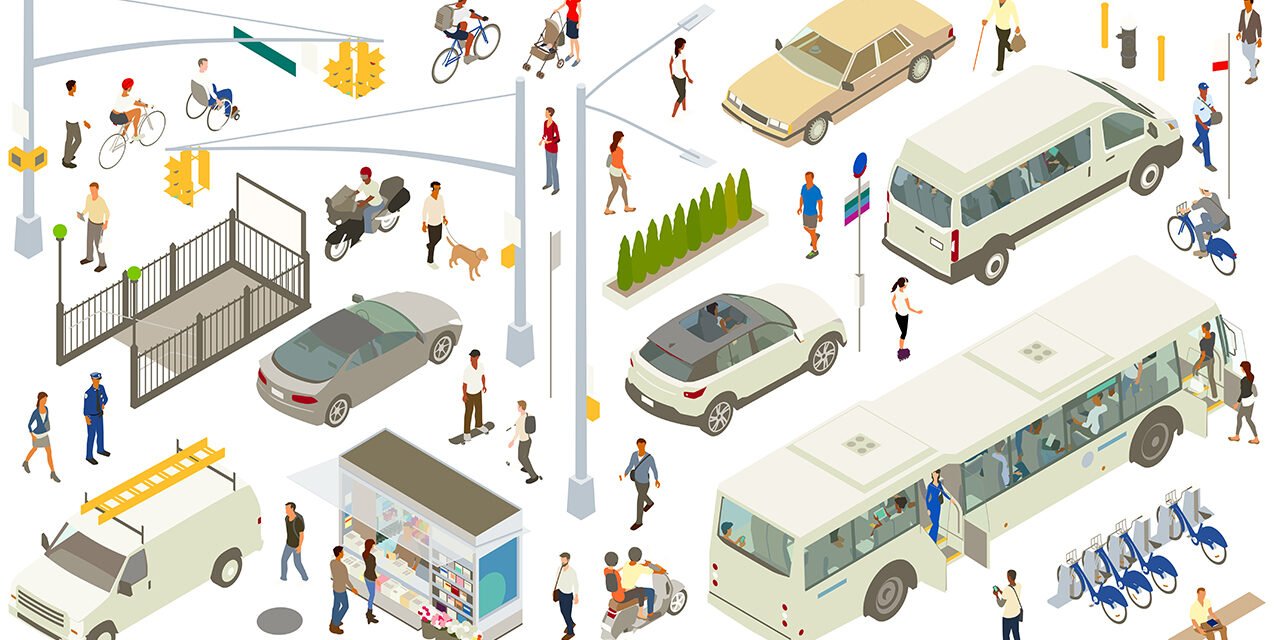
Smart city infrastructure promotes sustainability by integrating alternative mobility solutions such as shared electric vehicles, bike-sharing systems, and electric public transportation. These options reduce the number of private cars on the road, lower emissions, and encourage a shift toward greener transportation alternatives. - Vehicle-to-Everything (V2X) Communication:
V2X technology allows vehicles to communicate with other vehicles, infrastructure, and even pedestrians. This enhances safety, reduces accidents, and helps vehicles adapt to changes in road conditions or traffic, improving the overall transportation experience in a smart city. - Data-Driven Decision Making:
The vast amount of data collected in smart cities allows for more efficient urban planning. This data can inform decisions about road infrastructure, traffic patterns, parking, and other elements that directly impact automobile transportation. Over time, cities can adapt their infrastructure to meet evolving transportation needs.
In summary, smart city infrastructure enhances the efficiency, safety, and sustainability of automobile transportation while promoting the integration of new technologies like autonomous and electric vehicles.