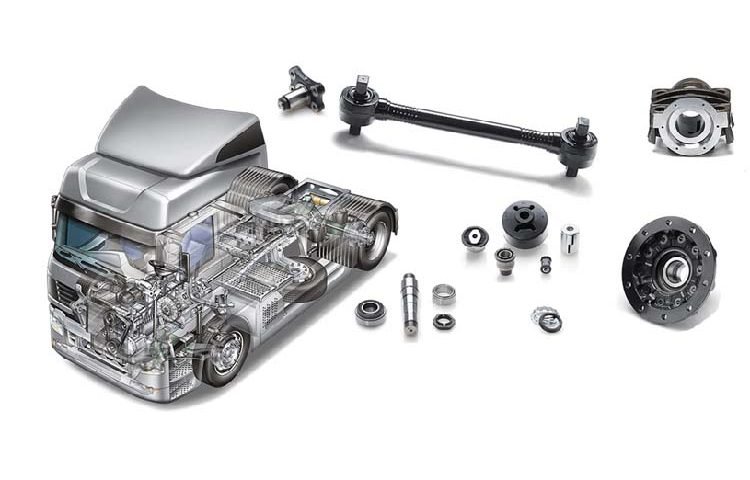
Heavy truck manufacturing is a complex process involving multiple components and systems to ensure durability, performance, and safety. Here are the key components involved:
1. Chassis & Frame
- The backbone of the truck, providing structural integrity.
- Made from high-strength steel or aluminum for durability and load-bearing capacity.
2. Engine
- Typically diesel-powered, but newer models include CNG, LNG, and electric powertrains.
- Major components include the engine block, pistons, turbochargers, fuel injectors, and cooling system.
3. Transmission System
- Manual, automatic, or automated manual transmission (AMT).
- Responsible for transferring power from the engine to the wheels.
4. Axles & Suspension
- Front Axle: Steering and load-bearing.
- Rear Axles: Drive axles that support the truck’s weight and transfer power to the wheels.
- Suspension System: Can be leaf spring, air suspension, or coil spring, depending on load requirements.
5. Braking System
- Air brakes (pneumatic) are standard in heavy trucks.
- Components include brake chambers, compressors, ABS, and emergency braking systems.
6. Cab & Body
- Driver’s cabin includes seating, dashboard, HVAC system, and ergonomic controls.
- Options include sleeper cabs for long-haul trucks.
7. Electrical & Electronic Systems
- Includes wiring harnesses, lighting, dashboard instruments, and telematics.
- Advanced trucks integrate GPS, collision avoidance, lane departure warning, and adaptive cruise control.
8. Fuel System
- Includes fuel tank, fuel injectors, fuel lines, and filters.
- Alternative fuel systems include hydrogen fuel cells and electric battery packs.
9. Cooling System
- Radiator, coolant, water pump, and fan system to prevent engine overheating.
10. Exhaust & Emission Control
- Diesel trucks use selective catalytic reduction (SCR) and diesel particulate filters (DPF) to reduce emissions.
- Modern trucks comply with Euro 6 or Bharat Stage VI (BS6) emission standards.
11. Steering System
- Hydraulic or electric power steering.
- Steering gearbox and column for maneuverability.
12. Tires & Wheels
- Heavy-duty tires designed for durability and load-bearing capacity.
- Steel or alloy wheels optimized for different terrains.
13. Safety Systems
- Airbags, collision mitigation systems, lane-keeping assist, and driver fatigue monitoring.
- Electronic Stability Control (ESC) to prevent rollovers.
14. Trailer Coupling & Hitch System
- Fifth-wheel coupling for semi-trailers.
- Tow hitches for rigid-body trucks.
15. Body & Customization
- Trucks can be configured as dump trucks, cement mixers, refrigerated trucks, tankers, etc.
- Custom-built bodies for industry-specific needs.