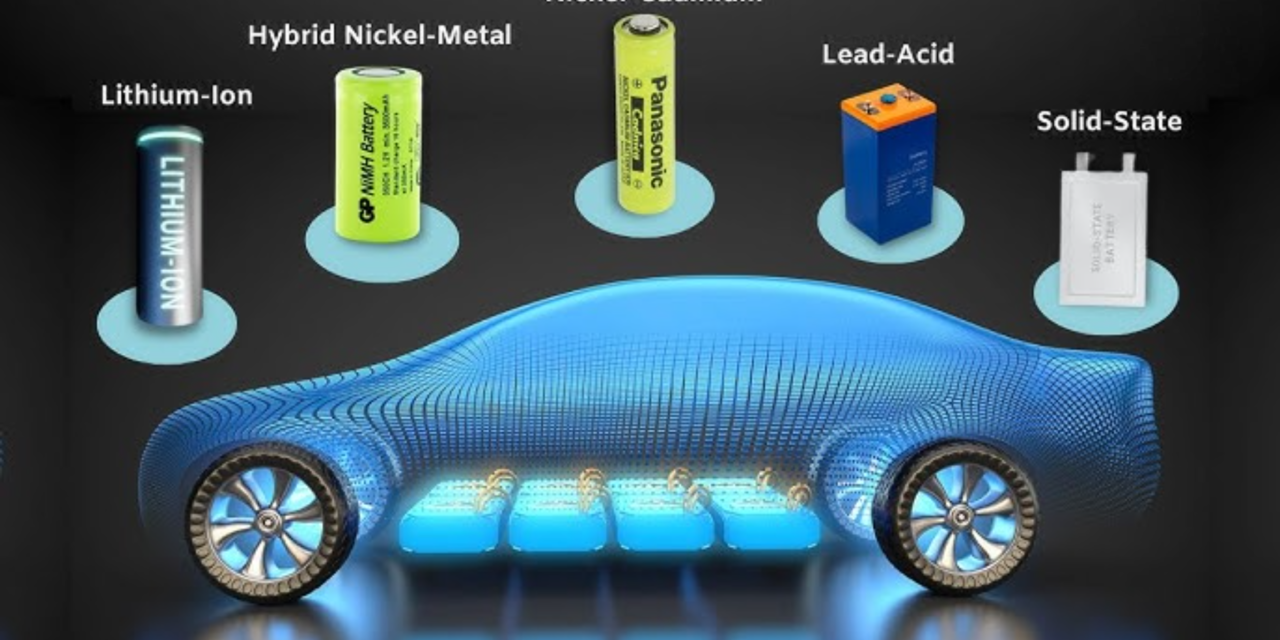
The performance, range, and overall efficiency of an EV largely depend on its battery. The most commonly used battery types in EVs include Lithium-ion (Li-ion), Nickel-Metal Hydride (NiMH), Solid-State Batteries, and others. Here’s an overview of each type and their differences:
1. Lithium-Ion (Li-ion) Batteries
- Description: The most widely used battery type in EVs due to its high energy density, long cycle life, and lightweight design.
- Key Features:
- High energy density: Provides longer driving ranges.
- Fast charging capability: Compatible with rapid charging infrastructure.
- Lightweight: Improves vehicle efficiency and performance.
- Thermal stability: Requires advanced cooling systems to prevent overheating.
- Applications: Found in most modern EVs, such as Tesla, Nissan Leaf, and Hyundai Kona Electric.
- Challenges: Expensive to produce and prone to degradation over time.
2. Nickel-Metal Hydride (NiMH) Batteries
- Description: An older battery technology used mainly in hybrid vehicles. It is more durable than Li-ion but less efficient for pure electric vehicles.
- Key Features:
- Good lifespan: Durable and reliable in varying conditions.
- Lower energy density: Results in shorter driving ranges compared to Li-ion.
- High self-discharge rate: Loses charge faster when not in use.
- Applications: Common in hybrid electric vehicles (HEVs), such as the Toyota Prius.
- Challenges: Heavier, bulkier, and less energy-efficient than Li-ion batteries.
3. Solid-State Batteries (Emerging Technology)
- Description: Use a solid electrolyte instead of the liquid or gel electrolytes found in Li-ion batteries.
- Key Features:
- Higher energy density: Potential to offer much greater driving range.
- Improved safety: Reduced risk of overheating or thermal runaway.
- Longer lifespan: Less prone to degradation.
- Applications: Currently in development; expected to revolutionize EV battery technology in the near future.
- Challenges: Expensive to manufacture and still in early stages of commercialization.
4. Lithium Iron Phosphate (LFP) Batteries
- Description: A subtype of Li-ion batteries, known for their stability and safety.
- Key Features:
- Enhanced safety: Less prone to overheating or catching fire.
- Long lifespan: High cycle life compared to standard Li-ion batteries.
- Lower energy density: Shorter range than conventional Li-ion batteries.
- Cost-effective: Cheaper to produce.
- Applications: Widely used in budget EVs and commercial vehicles, such as Tesla’s standard-range models in some regions.
5. Lead-Acid Batteries
- Description: One of the oldest battery technologies, primarily used in starter batteries for internal combustion engine vehicles and some low-speed electric vehicles.
- Key Features:
- Low cost: Economical compared to other battery types.
- Heavy and bulky: Limits use in modern EVs.
- Short lifespan: Requires frequent replacement.
- Applications: Used in golf carts, forklifts, and auxiliary functions in EVs (e.g., powering lights and electronics).
- Challenges: Low energy density and not suitable for high-performance EVs.
6. Nickel-Cobalt-Aluminum (NCA) Batteries
- Description: A subtype of Li-ion batteries with a high energy density and long lifespan.
- Key Features:
- High energy density: Suitable for EVs requiring long ranges.
- Durable: Offers a longer lifecycle compared to other Li-ion chemistries.
- Expensive: Uses cobalt, a costly and resource-limited material.
- Applications: Commonly used by Tesla in some models.
7. Nickel-Manganese-Cobalt (NMC) Batteries
- Description: Another Li-ion variant that balances energy density, lifespan, and cost.
- Key Features:
- Versatility: Used in EVs requiring a mix of high performance and affordability.
- Reduced cobalt usage: Lower cost compared to NCA batteries.
- Applications: Widely adopted in many EVs, such as BMW and Chevrolet Bolt.
Key Insights
- Lithium-ion batteries dominate the EV market due to their balance of performance and cost.
- Solid-state batteries are the future of EV technology, offering improved safety and energy density.
- Manufacturers are actively working to reduce the reliance on rare and expensive materials like cobalt for sustainability and cost-effectiveness.