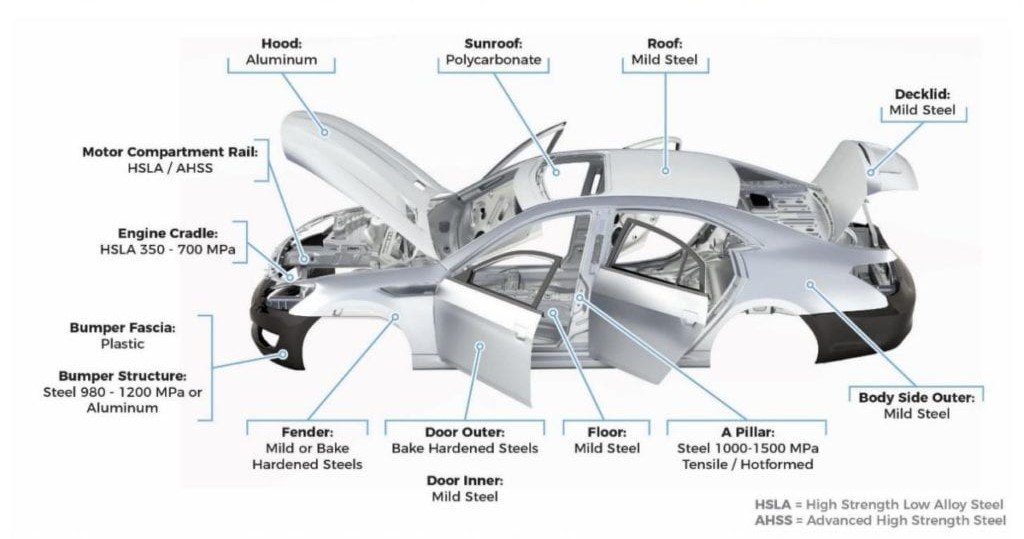
The materials used in the manufacturing of commercial vehicles are selected for their strength, durability, cost-effectiveness, and ability to withstand heavy-duty operations. Since commercial vehicles such as trucks, buses, and utility vehicles are built for high performance under demanding conditions, the choice of materials is critical to ensuring longevity, safety, and overall functionality.
Here’s a breakdown of the common materials used in commercial vehicle manufacturing:
1. Steel
- Usage: Steel remains one of the most widely used materials in the construction of commercial vehicles. It is used for the frame, chassis, body panels, and reinforcement of components.
- Why It’s Used:
- Strength: Steel offers excellent strength and resistance to impact and stress, which is essential for commercial vehicles that carry heavy loads or are subjected to rigorous conditions.
- Durability: It can withstand the wear and tear of long-haul operations.
- Cost-Effective: Steel is relatively inexpensive compared to other metals and is readily available in various grades for different applications (e.g., mild steel for bodywork, high-strength steel for structural elements).
2. Aluminum
- Usage: Aluminum is widely used in commercial vehicles, particularly in parts where weight reduction is important, such as engine blocks, body panels, wheels, and some structural components.
- Why It’s Used:
- Lightweight: Aluminum is significantly lighter than steel, which helps to reduce the overall weight of the vehicle and improve fuel efficiency, an important consideration for commercial vehicles.
- Corrosion Resistance: Aluminum is resistant to rust and corrosion, making it ideal for vehicles that are exposed to harsh environmental conditions.
- Strength-to-Weight Ratio: While not as strong as steel in some applications, aluminum’s strength-to-weight ratio allows it to be used effectively in weight-sensitive areas.
3. High-Strength Steel (HSS)
- Usage: High-strength steel is often used in parts of the vehicle that are subjected to high levels of stress, such as the chassis, frame, axles, and suspension systems.
- Why It’s Used:
- Increased Durability and Safety: High-strength steel allows for thinner, lighter parts that retain the strength required to support heavy loads.
- Improved Fuel Efficiency: The use of high-strength steel helps reduce vehicle weight, improving fuel economy without sacrificing performance.
4. Composite Materials
- Usage: Composites, including carbon fiber and fiberglass, are used in specific commercial vehicle applications, particularly for body panels, interior parts, and sometimes truck beds.
- Why They’re Used:
- Lightweight: Composites are lighter than metals, which is beneficial for reducing the overall weight of the vehicle and improving fuel efficiency.
- Strength and Flexibility: Composite materials can provide strength while also being more flexible than metals, making them suitable for impact-resistant areas.
- Corrosion Resistance: Fiberglass, in particular, is highly resistant to corrosion, making it ideal for use in areas exposed to moisture, chemicals, or harsh environments.
5. Rubber
- Usage: Rubber is used extensively in commercial vehicles, particularly for tires, seals, hoses, gaskets, and suspension components.
- Why It’s Used:
- Flexibility and Traction: Rubber tires are essential for grip and traction, especially for commercial trucks, buses, and delivery vehicles operating in various terrains and weather conditions.
- Vibration Dampening: Rubber components such as bushings and gaskets help reduce vibrations and noise, contributing to the overall comfort and safety of the vehicle.
6. Glass
- Usage: Glass is primarily used for windows, mirrors, and windshields in commercial vehicles.
- Why It’s Used:
- Visibility and Safety: Glass provides clear visibility for drivers, ensuring safety on the road.
- Durability: Laminated and tempered glass is used for strength, ensuring it can withstand impacts and minimize shattering.
- Light Transmission: Glass is also used for effective light transmission, helping to improve the safety of drivers and passengers, especially at night.
7. Copper and Copper Alloys
- Usage: Copper is used in electrical wiring, connectors, and components in commercial vehicles.
- Why It’s Used:
- Conductivity: Copper has excellent electrical conductivity, making it ideal for wiring and electrical systems that power vehicle lights, sensors, and other electronic components.
- Corrosion Resistance: Copper is resistant to corrosion, ensuring long-term durability of electrical components in various operating conditions.
8. Plastics
- Usage: Plastics are used in various parts of commercial vehicles, including interior components (dashboards, seats, and door panels), exterior trim, and fluid reservoirs (e.g., fuel tanks).
- Why They’re Used:
- Lightweight: Plastics help reduce vehicle weight, improving fuel efficiency and overall performance.
- Cost-Effective: Plastics are generally cheaper than metals and can be molded into complex shapes, allowing for customization and more affordable production.
- Durability: Modern plastics are durable and resistant to impact, UV radiation, and corrosion.
9. Titanium
- Usage: Titanium is less commonly used but can be found in certain high-performance applications, such as engine parts, exhaust systems, and specialized components.
- Why It’s Used:
- Strength-to-Weight Ratio: Titanium offers exceptional strength with a low weight, making it useful for performance vehicles or vehicles that require components that need to withstand extreme stress.
- Corrosion Resistance: Titanium resists corrosion from exposure to moisture, chemicals, and high temperatures.
10. Zinc
- Usage: Zinc is often used in the form of galvanized steel (steel coated with a layer of zinc) for areas that require enhanced corrosion protection, such as underbody components, exhaust systems, and chassis parts.
- Why It’s Used:
- Corrosion Resistance: Zinc is highly effective at protecting steel from corrosion, particularly in areas of the vehicle exposed to water, road salts, and chemicals.
- Durability: Galvanized steel enhances the longevity of commercial vehicles, reducing maintenance costs related to rust and corrosion.
11. Carbon Fiber (Specialized Applications)
- Usage: Carbon fiber is used in specialized commercial vehicle components that require lightweight, high-strength materials, such as performance trucks or vehicles that need to minimize weight.
- Why It’s Used:
- High Strength and Low Weight: Carbon fiber has an excellent strength-to-weight ratio, which helps reduce the overall weight of the vehicle while maintaining structural integrity.
- Durability: It is resistant to fatigue, corrosion, and high temperatures, making it ideal for demanding commercial vehicle applications.
Conclusion
The materials used in the manufacturing of commercial vehicles are chosen based on the specific functional requirements of each vehicle type, considering factors such as strength, durability, weight, and cost efficiency. Materials like steel, aluminum, and rubber are staples in commercial vehicle production, while more specialized materials such as composites, titanium, and carbon fiber may be used for specific high-performance or durability-enhanced applications. This combination of materials ensures that commercial vehicles can perform effectively and efficiently in demanding environments, providing businesses with reliable transportation solutions for goods and passengers.
Hashtags
#CommercialVehicleMaterials #HeavyDutyMaterials #TruckManufacturing #DurableMaterials #VehicleManufacturingMaterials #FleetVehicleMaterials #SteelInTrucks #HighStrengthSteel #SteelAlloys #MetalAlloysInVehicles #StainlessSteelVehicles #SteelTruckFrame #AluminumInVehicles #AluminumTrucks #LightweightAluminum #AluminumChassis #AluminumForDurability #AluminumAlloyTrucks #PlasticMaterialsInTrucks #CompositeMaterials #FiberReinforcedPlastics #VehiclePlastics #PlasticPartsInVehicles #LightweightComposites #RubberInCommercialVehicles #RubberParts #RubberTruckComponents #TruckTires #RubberSeals #VehicleGlass #WindshieldGlass #SafetyGlassInVehicles #TruckGlassWindows #VehicleInteriorMaterials #TruckSeats